Teachers Mutual Bank Limited
My role & responsibility
I collaborated with
Duration
April - July 2025
What impact has the project had?
Intangible ones
Starting this project was bittersweet. There was no precedent, no design foundation, and the work exposed several expected and unexpected issues. However, these learnings directly informed Phase 2 improvements. Seeing the work actively used — and iterated on — by the Internet Banking team reinforced that the effort added real value and laid the groundwork for a more seamless form-filling experience.
Tangible ones
In November 2025, more than 20% successfully completed the KYC process online. This significantly expedited customer data collection and reduced manual processing for the bank. The process went from having no digital capability to supporting over 21,000 online submissions.
What was the problem?
A large number of customers had not completed due diligence when they originally opened their accounts. Due to regulatory requirements, they were required to verify their personal and financial information within a specific timeframe. This process is known as KYC (Know Your Customer).
What were the key challenges and how I approached them?
The following images are recreated versions of the original product and do not reflect the exact live interface. They are intended to closely represent the experience while demonstrating my
design process.
Challenge 1
No existing design environment
At the time, there was no designer embedded in the Internet Banking team. Product owners and developers had historically filled that role. There were no design files or design system in place.
Before designing the experience itself, I needed to ensure:
The form content was clear and understandable.
The visual design aligned with existing Internet Banking patterns.
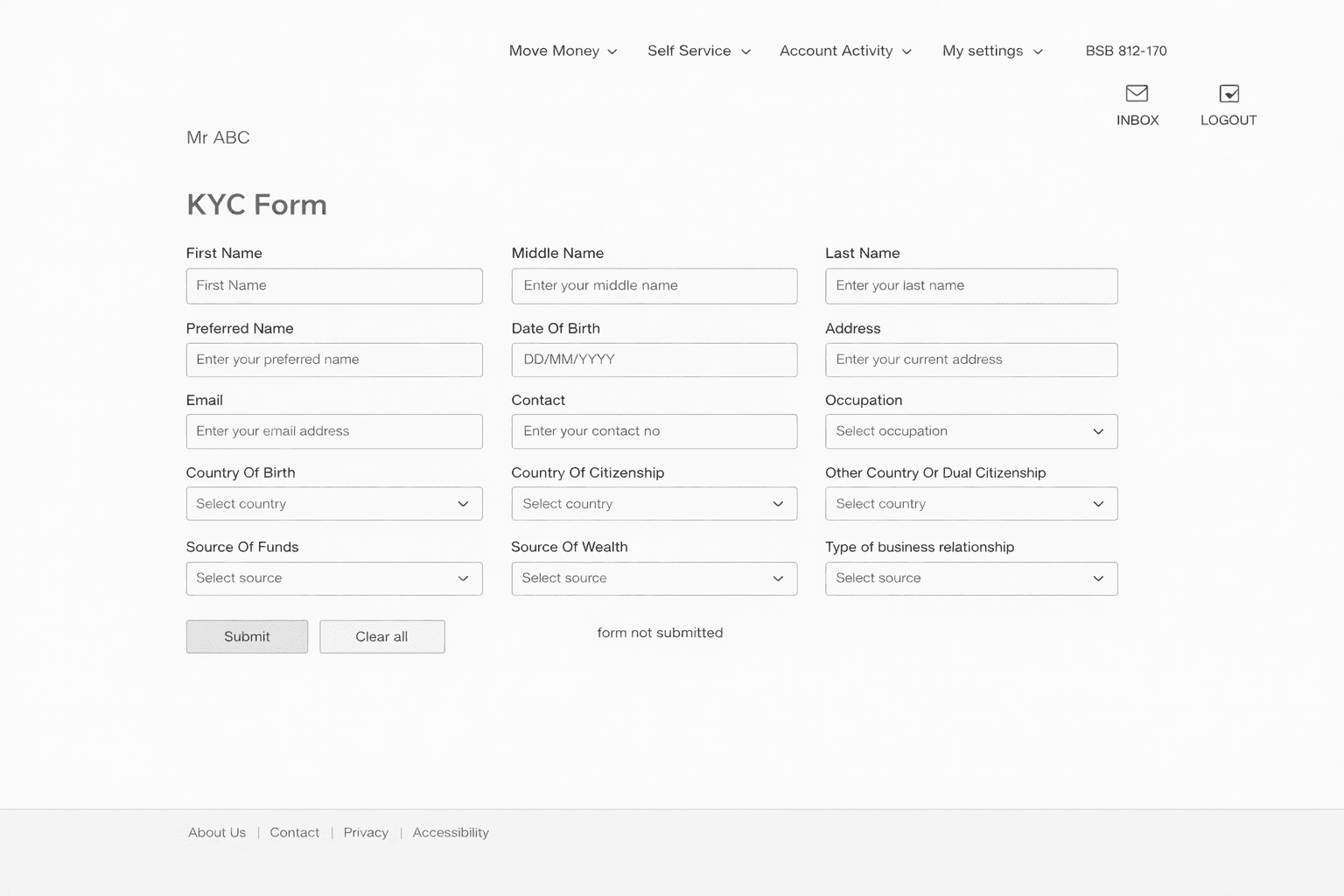
KYC form draft provided by Internet Banking team
Solution 1
I started from scratch by creating the first design file based on the existing build.
While not the most complex challenge, this step required close attention and became foundational for future development and iteration.
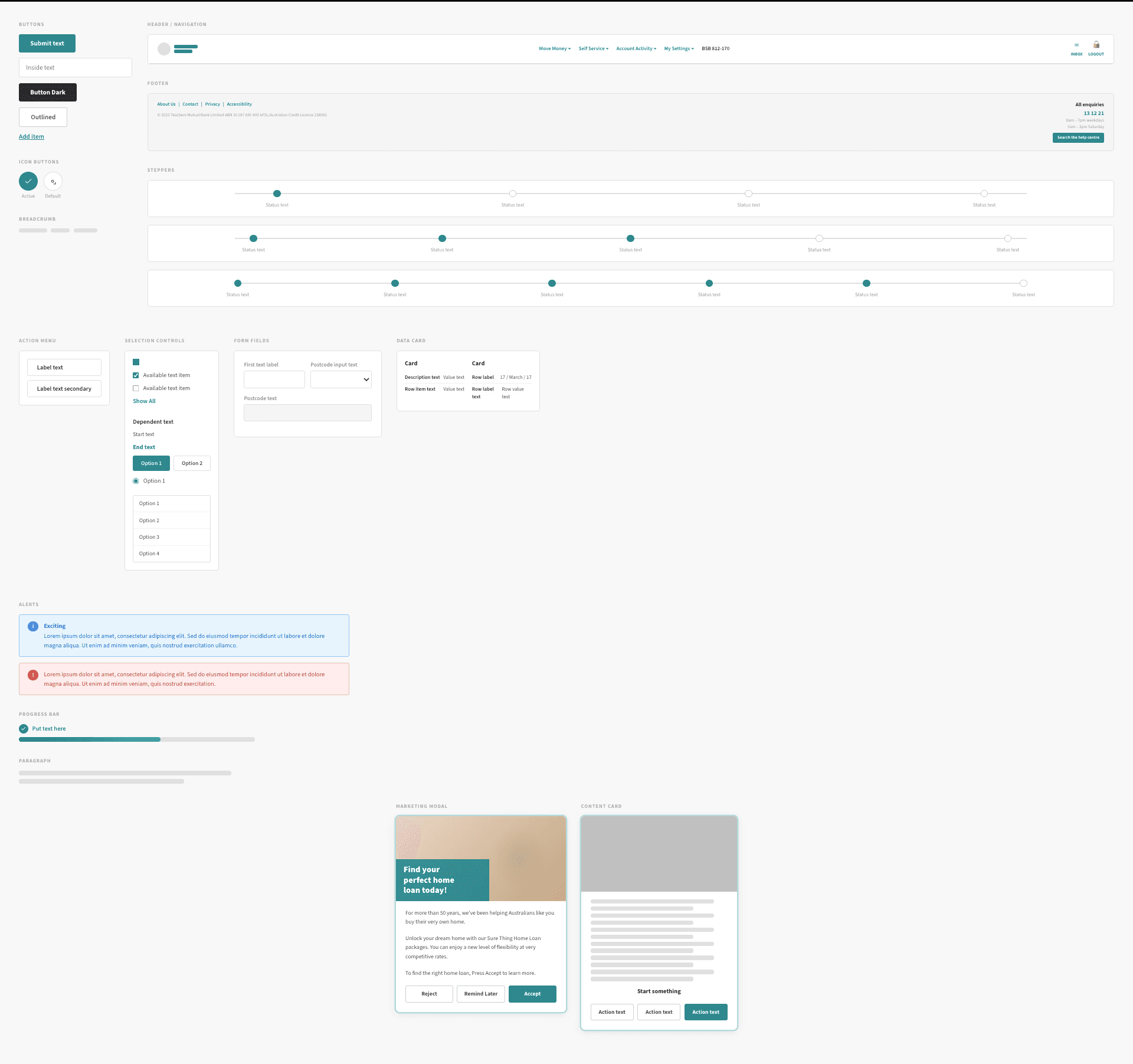
Design system overview showing all the reusable components
Challenge 2
Technical constraints affecting completion rate
Due to system limitations, personal information and financial information existed in multiple areas across the platform. The form could not be consolidated into a single flow, meaning it had to be split into multiple parts — increasing friction for users.
How could the design guide users through the right sections and maintain completion momentum despite these constraints?
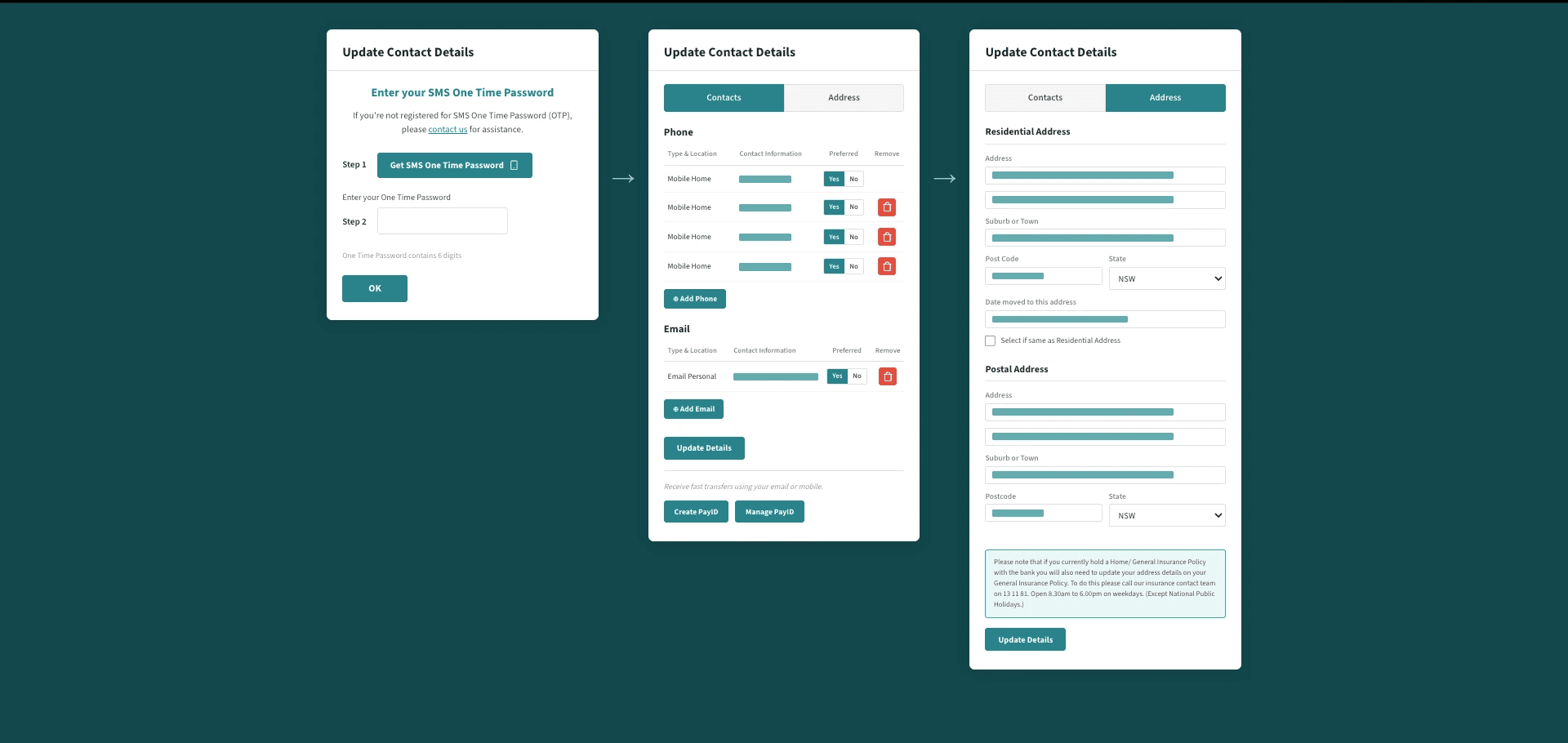
Personal information update was not part of the form
Solution 2
I designed clear “portals” that bridged personal information updates and the KYC form.
This helped users:
Update required information at the right time
Understand what steps remained
Continue the compliance journey once started
This approach led to both expected and unexpected outcomes, which informed later iterations.
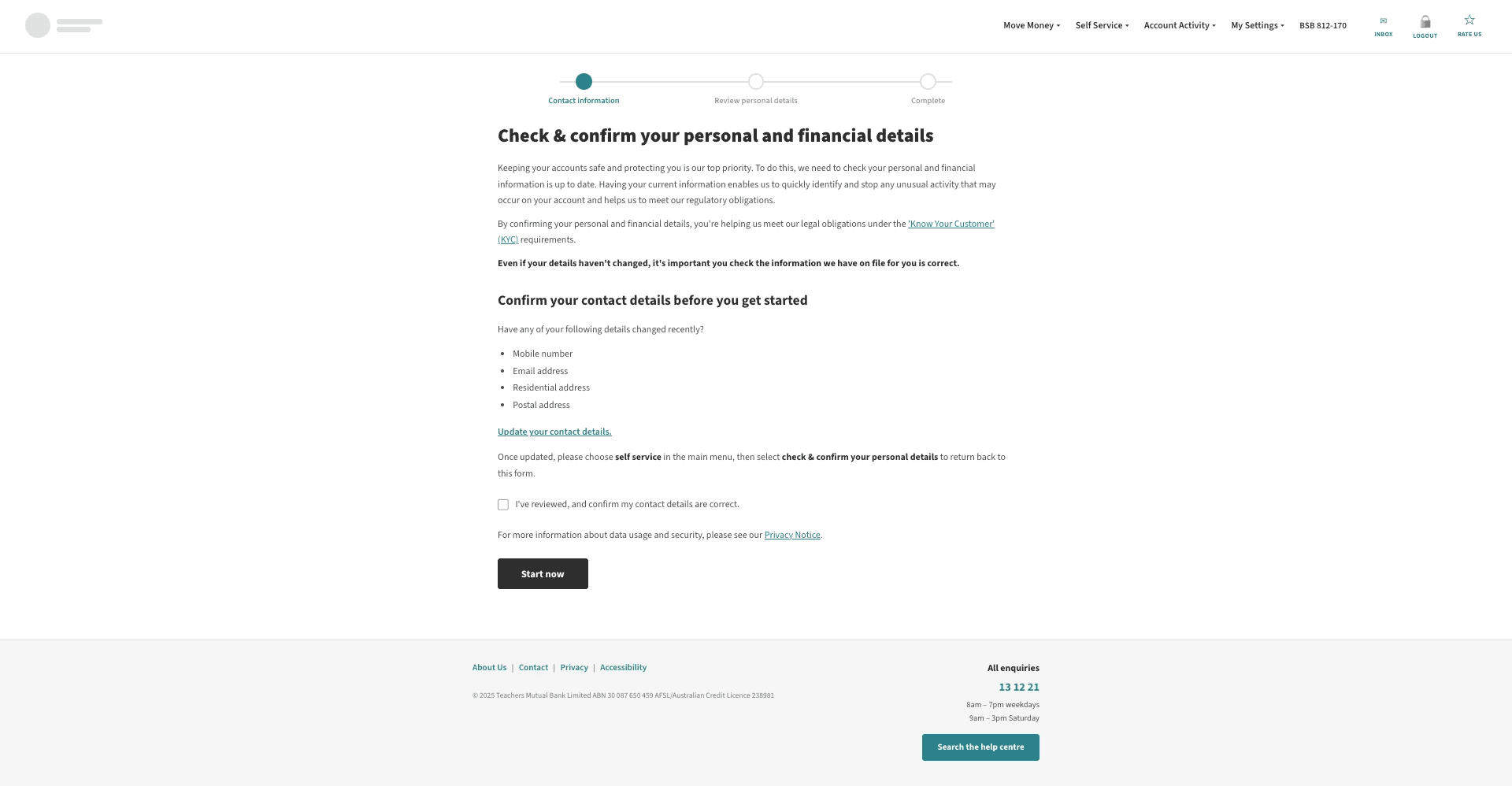
KYC form step 1 - enabling user to update information if required.
Challenge 3
Time and resource limitations
In the short term, system integration improvements were not feasible. There were also no tools available to support formal usability testing.
Solution 3
I gathered feedback internally from team members who were not directly involved in the project.
This provided more objective input and helped identify clarity issues early.
A major challenge was simplifying technical and outdated terminology.
Financial terms such as source of funds and source of wealth
Outdated occupation and employment labels
What I did
Worked closely with the Communications team to ensure language was clear, accurate, and consistent across paper and digital formats
Updated occupation labels to be more inclusive and modern (e.g. housewife → stay-at-home parent)
Clarified distinctions between occupation and employment status (e.g. retired as a status, not an occupation)
Allowed student as an employment status option to reduce friction when navigating long dropdown occupation list
Guided users to the correct process for name changes, as the name field was pre-populated and not editable
Given the importance of tone and trust, I also presented the form to a Customer Engagement Officer for feedback.
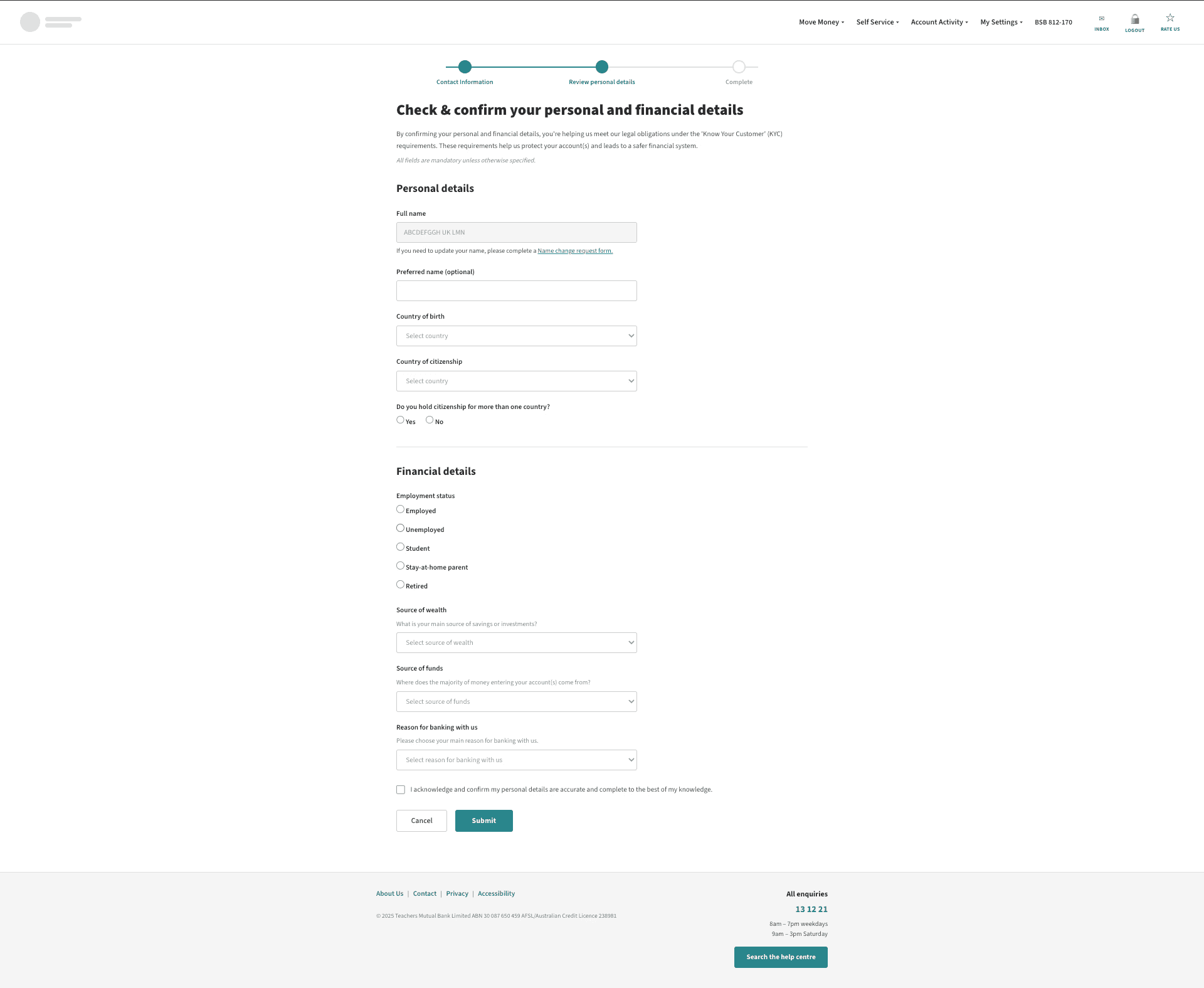
KYC form step 2 with streamlined occupation list, way to update personal detail and simplified terminology.
Outcomes and learnings
According to the Communications lead and developers, some customers dropped off at
Step 1, where they confirmed their details were correct.
Feedback suggested that users were not always aware the form contained multiple steps. This raised important questions:
These insights became key inputs for future KYC enhancements, especially if technical constraints remain.
What I'm proud of…
Taking a core compliance process from zero to digital within the organisation
Creating a solution that continues to be used and improves operational efficiency
Reducing effort for customers while helping them avoid account restrictions
What happened next?
As of January 2026 — when I was no longer part of the project —the Customer Journey Lead approached me to support future Internet Banking enhancements. I shared my design work and emerging design system so it could be reused in upcoming projects.
I also built a strong working relationship with developers during the project. When a KYC phase 2 was introduced, the team reached out for advice. I provided guidance on restructuring the form and improving the overall flow.